
From Collins Park to the skyline
The first Ultra took over Collins Park in Miami Beach in 1999. The name nodded to Depeche Mode's 1997 album Ultra, but the event quickly built its own identity around electronic music and Miami's spring calendar. By 2001 it had moved across the water to Bayfront Park, beginning a long, sometimes interrupted relationship with downtown.
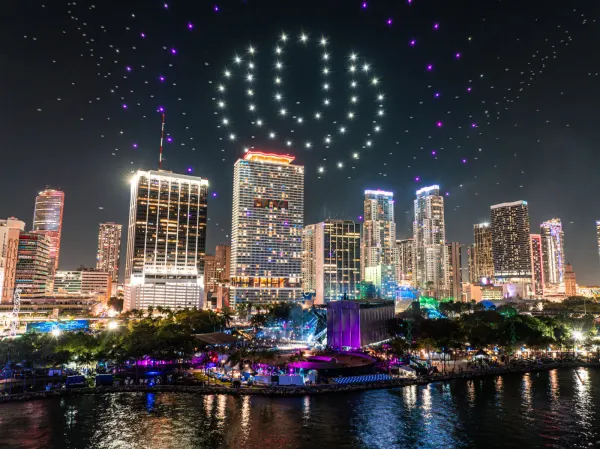
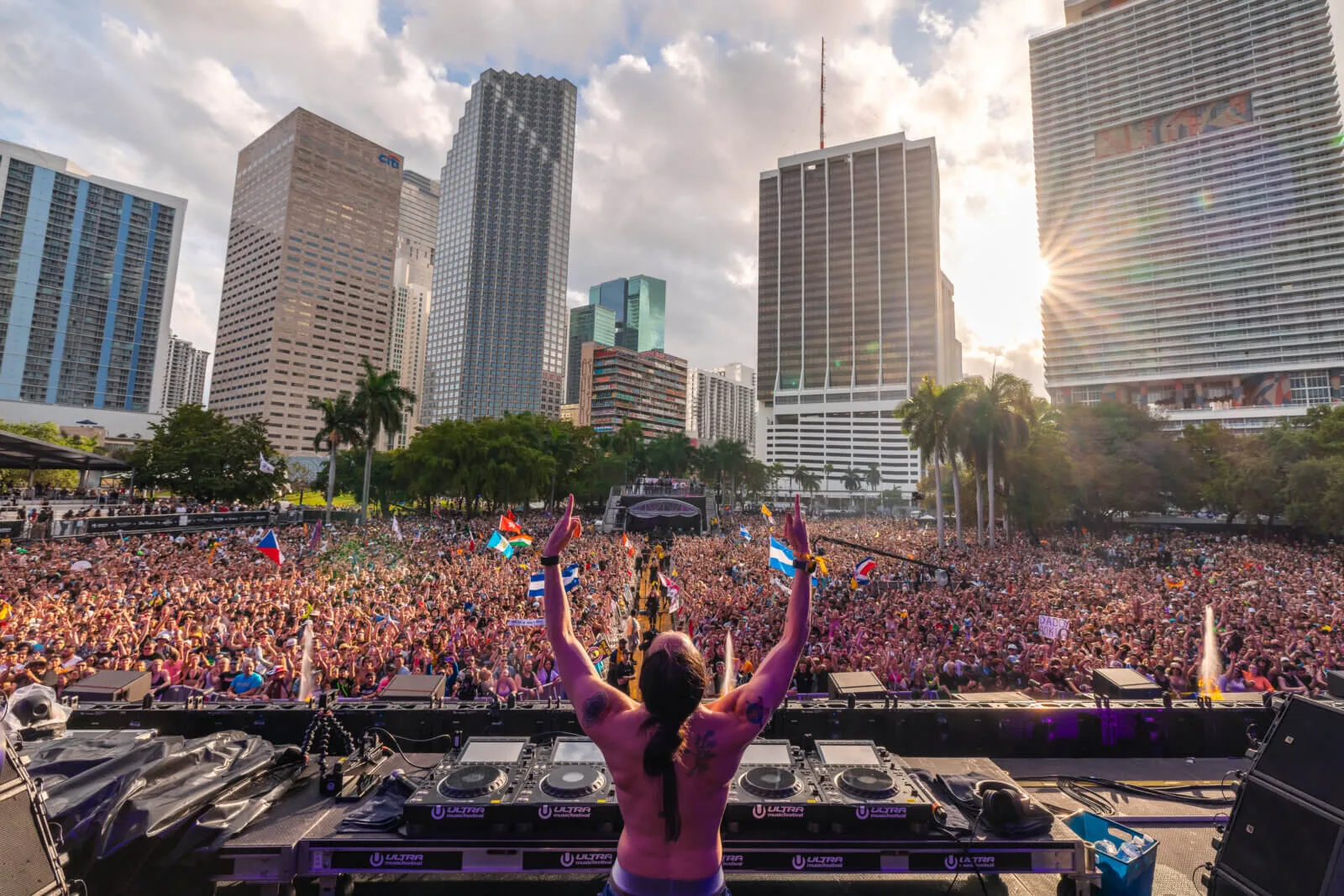
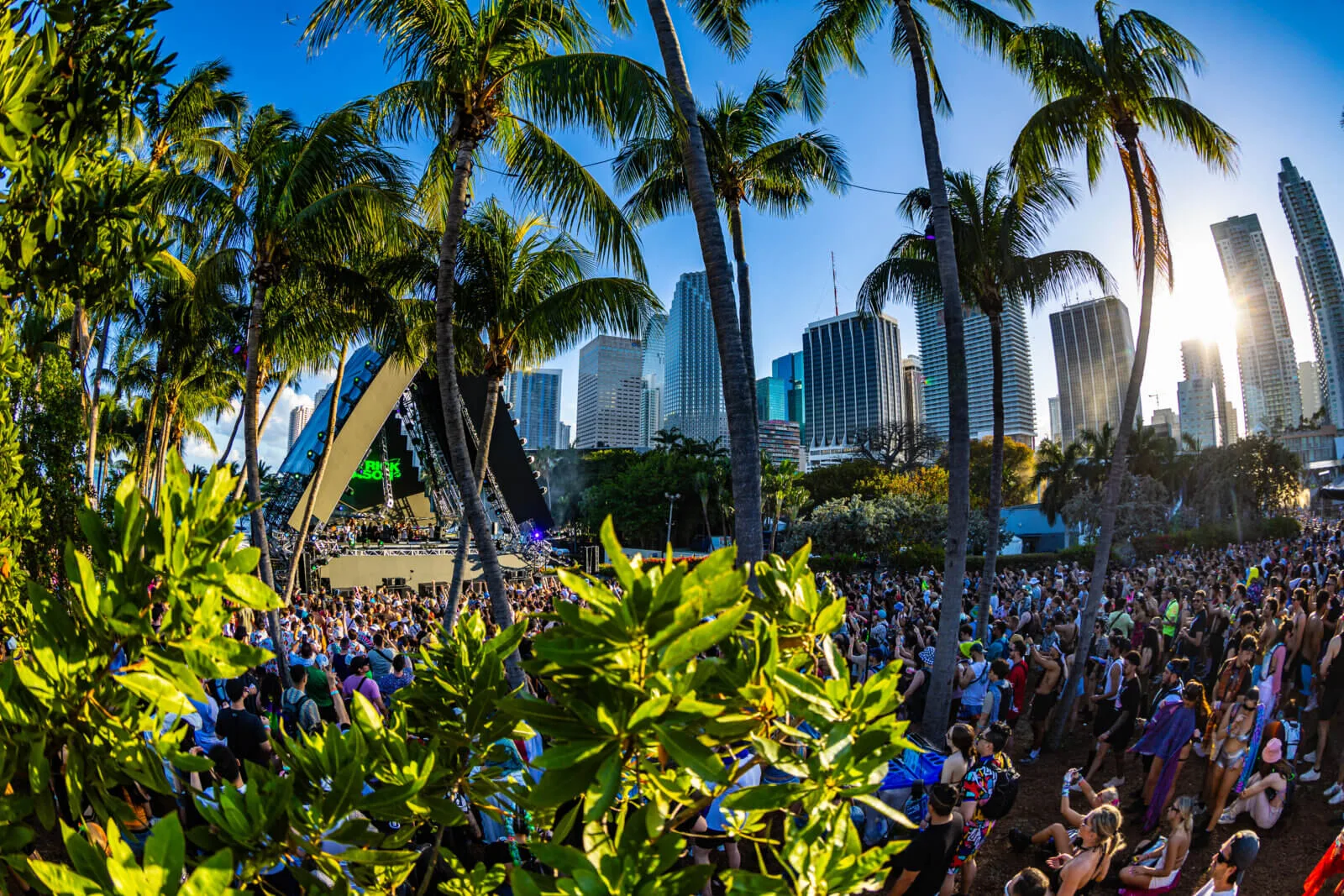
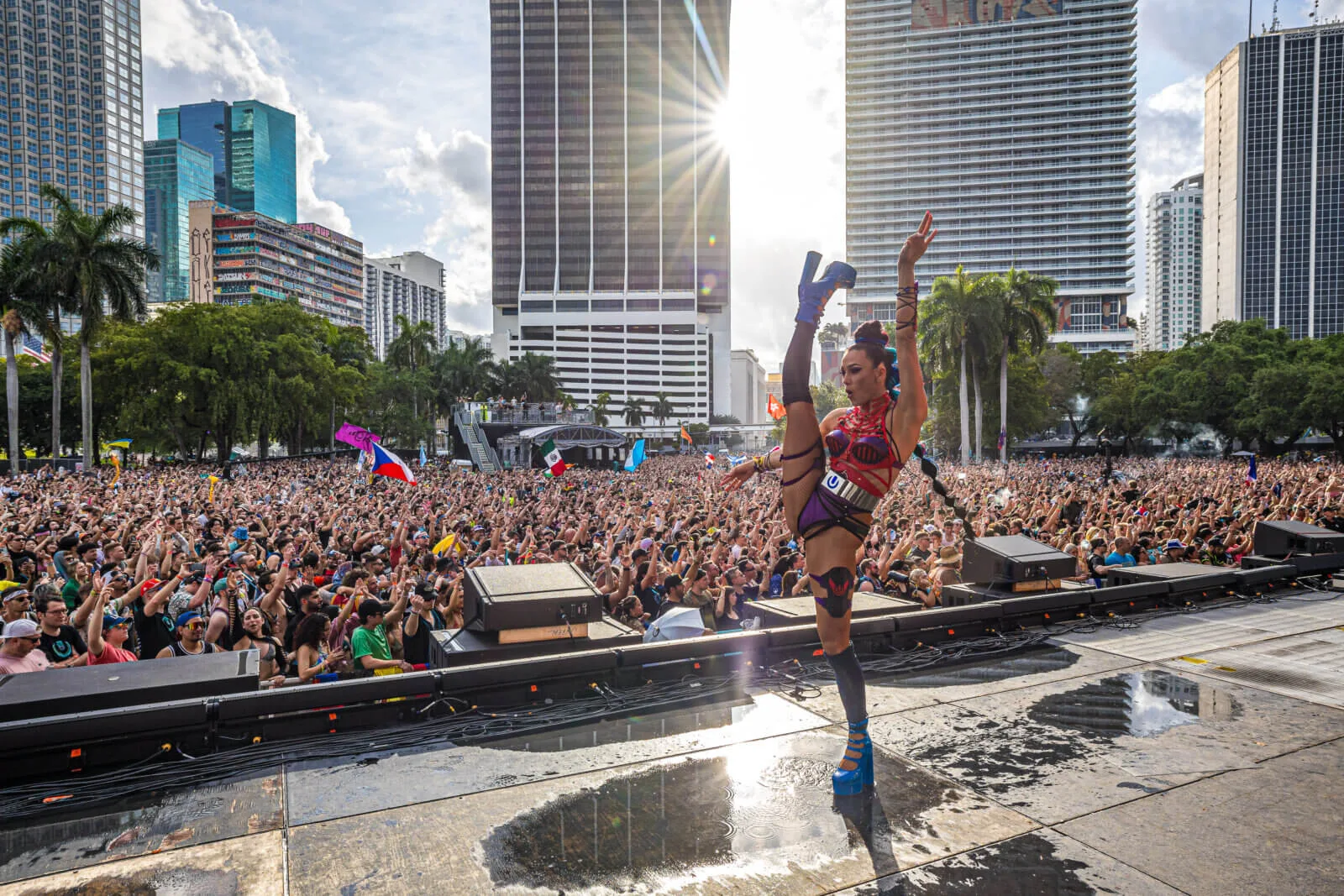
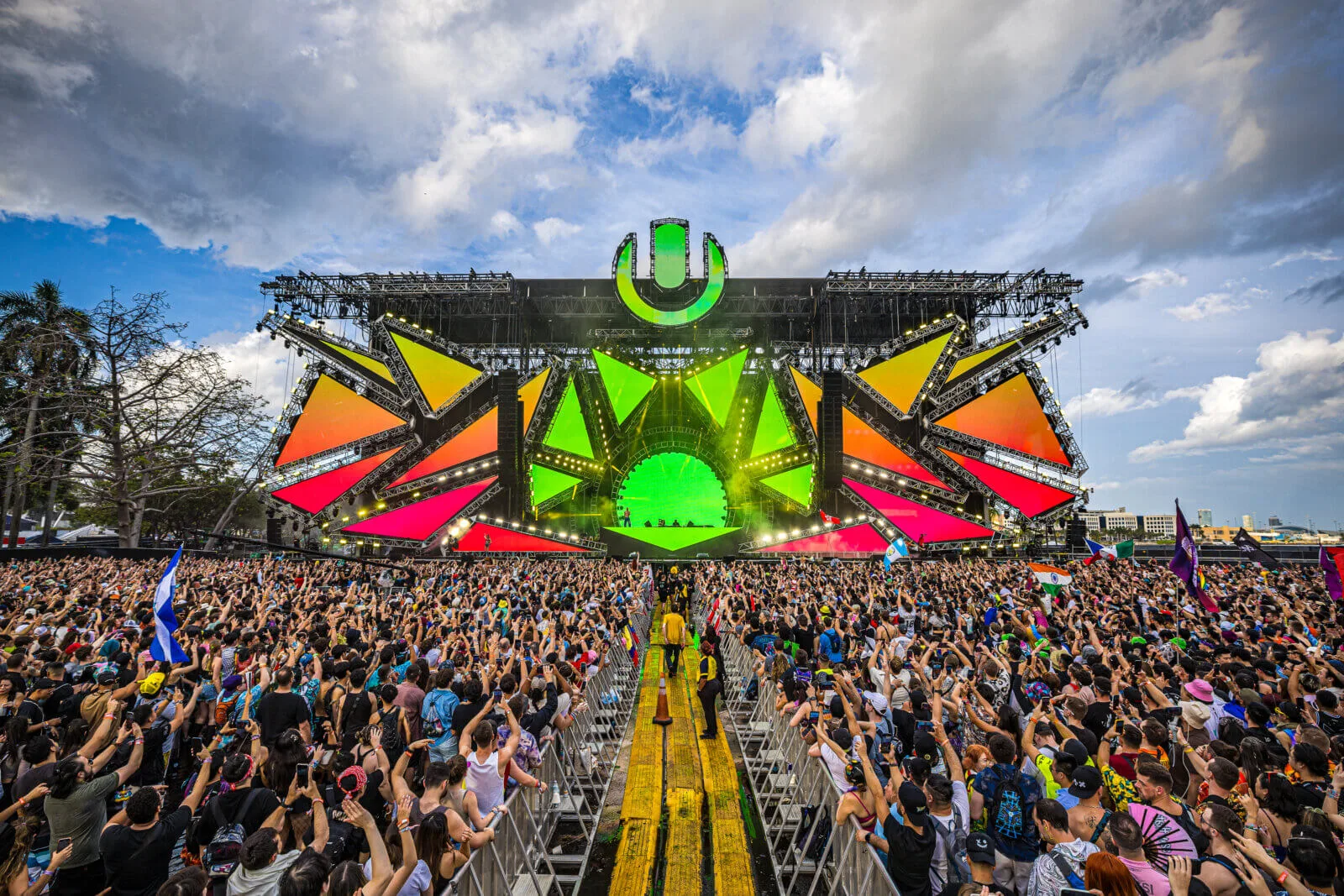
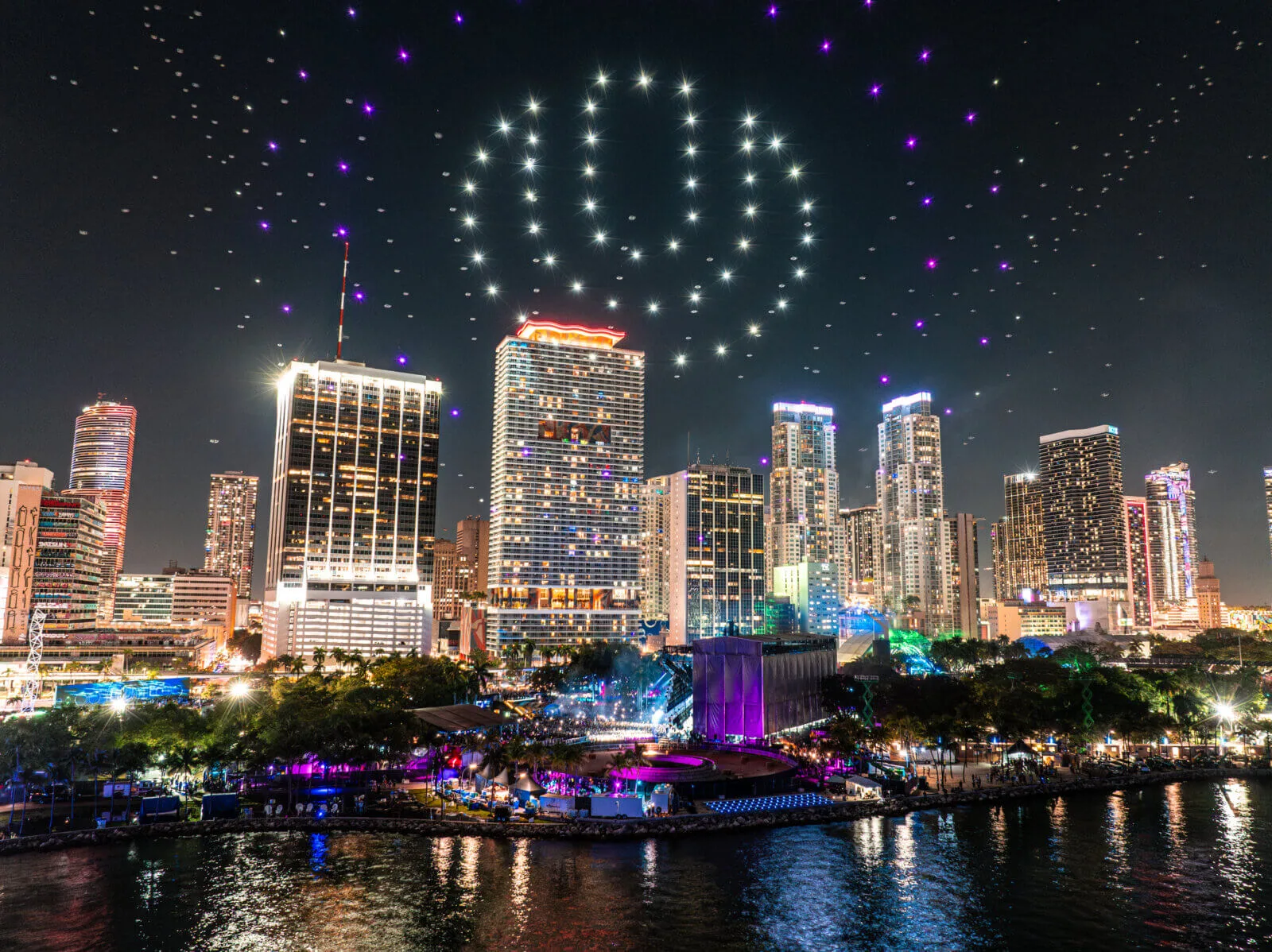
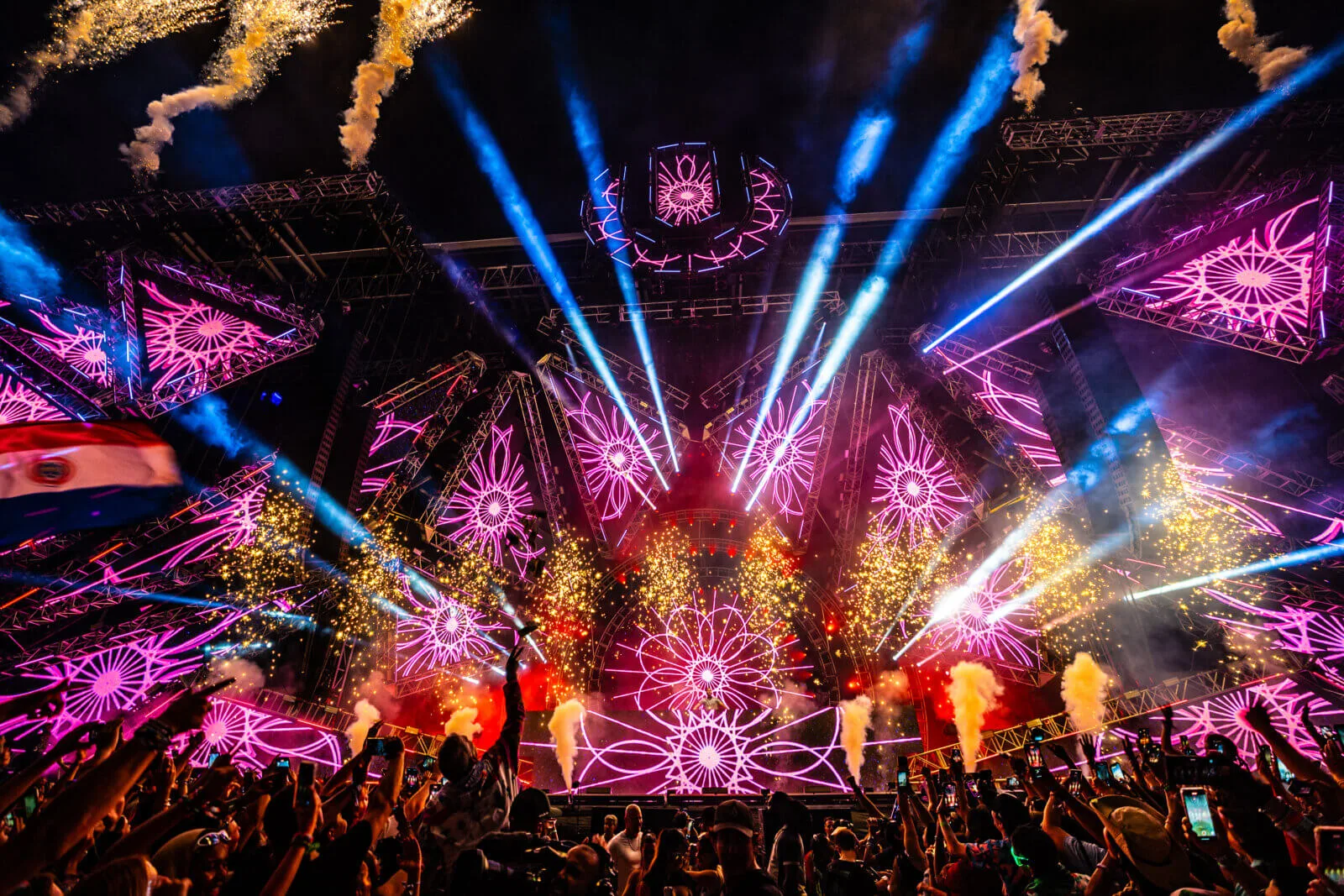
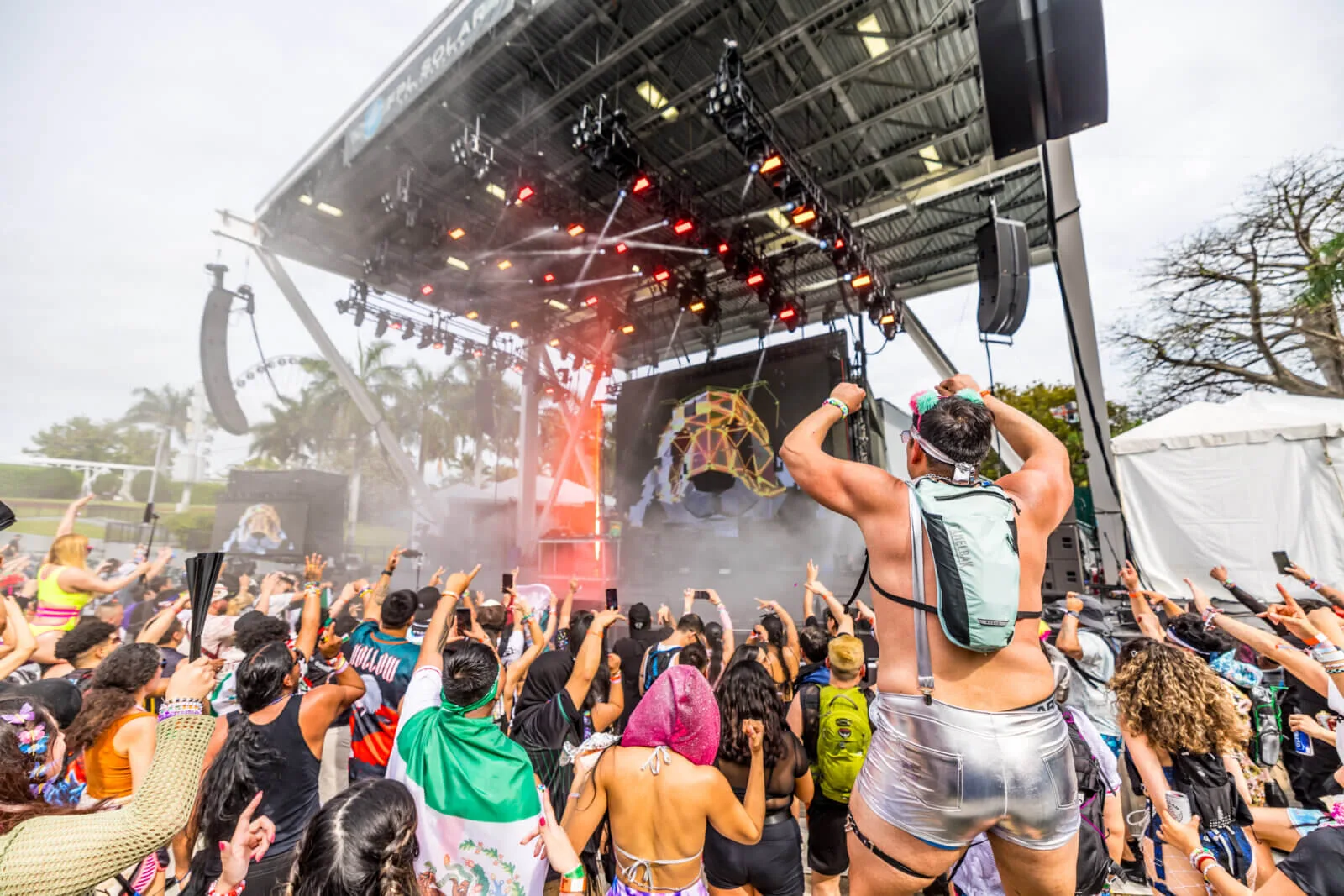
The move changed the picture as much as the capacity. Ultra's stages now sit inside the city, with towers behind the crowd and Biscayne Bay at the edge of the site. That compressed setting is part of the festival's character: high-rise Miami on one side, full-scale dance production on the other.
The split personality works
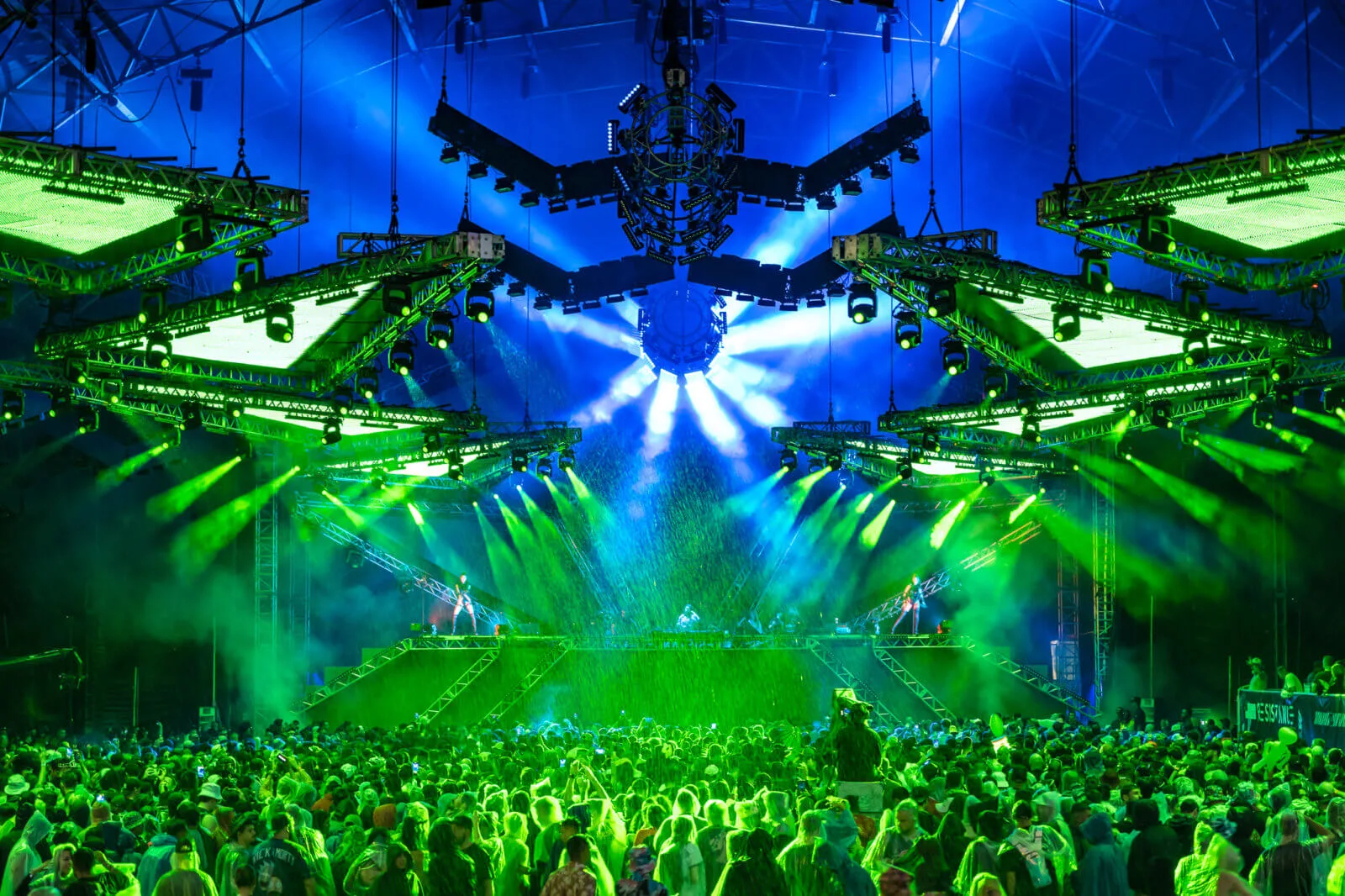
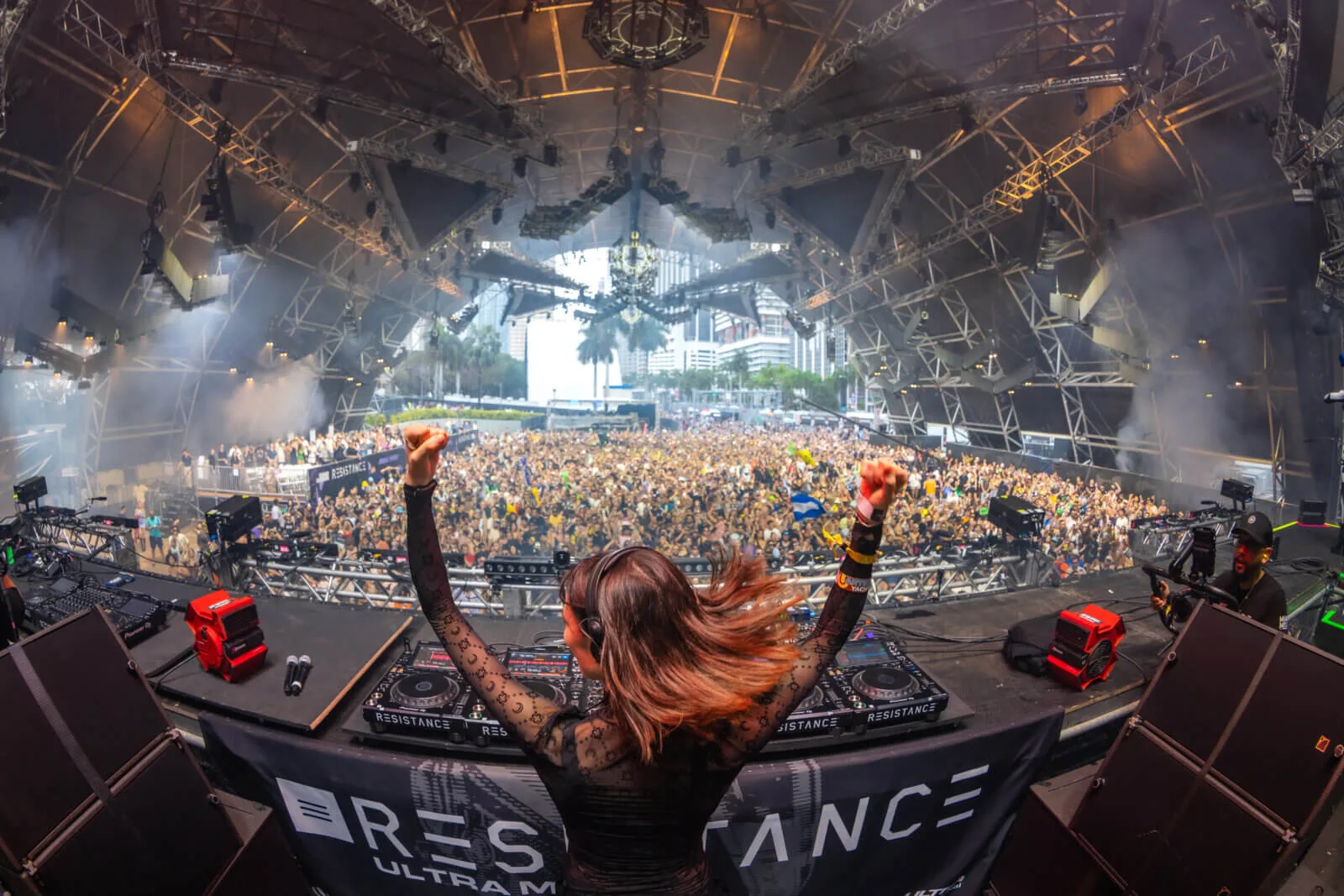
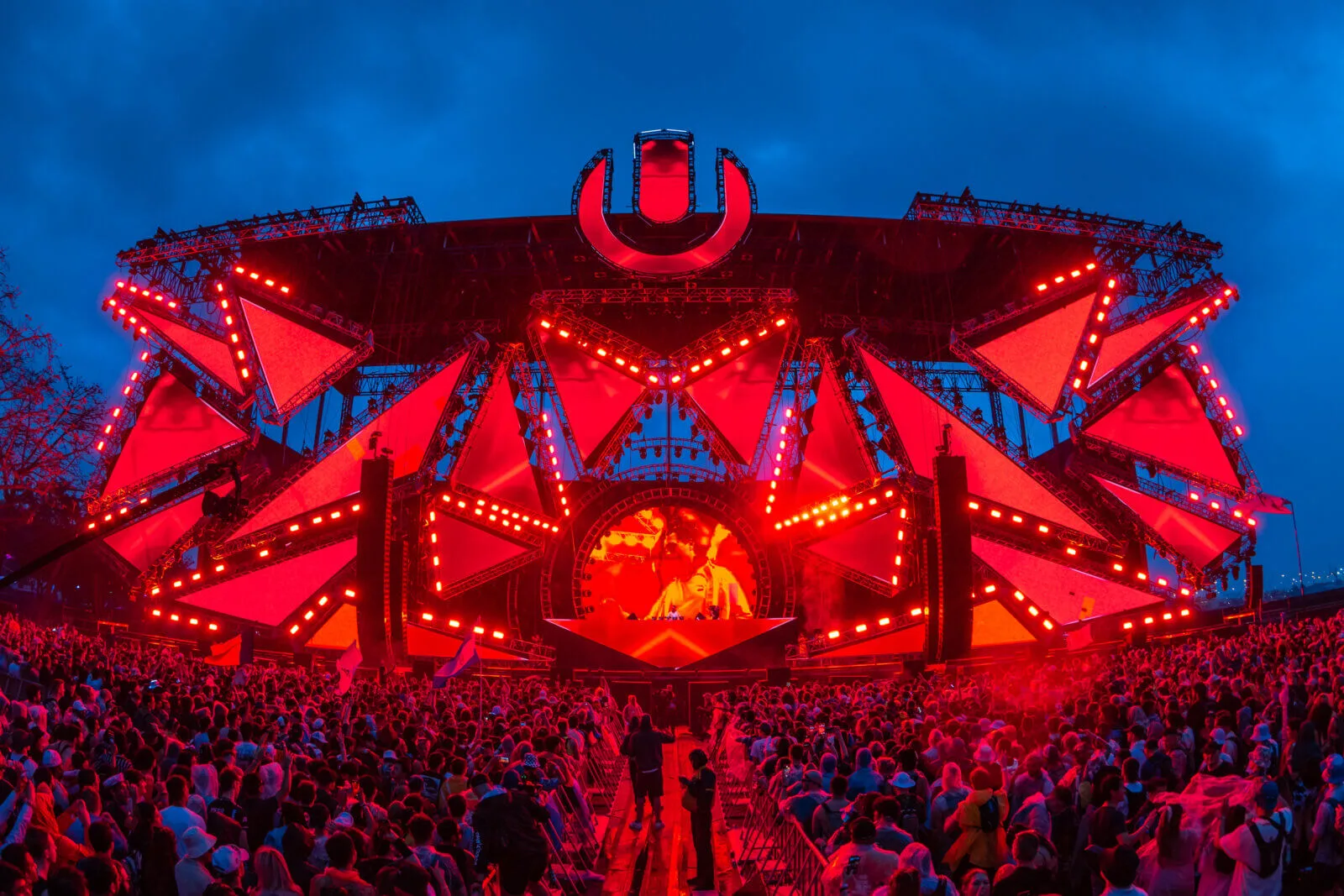
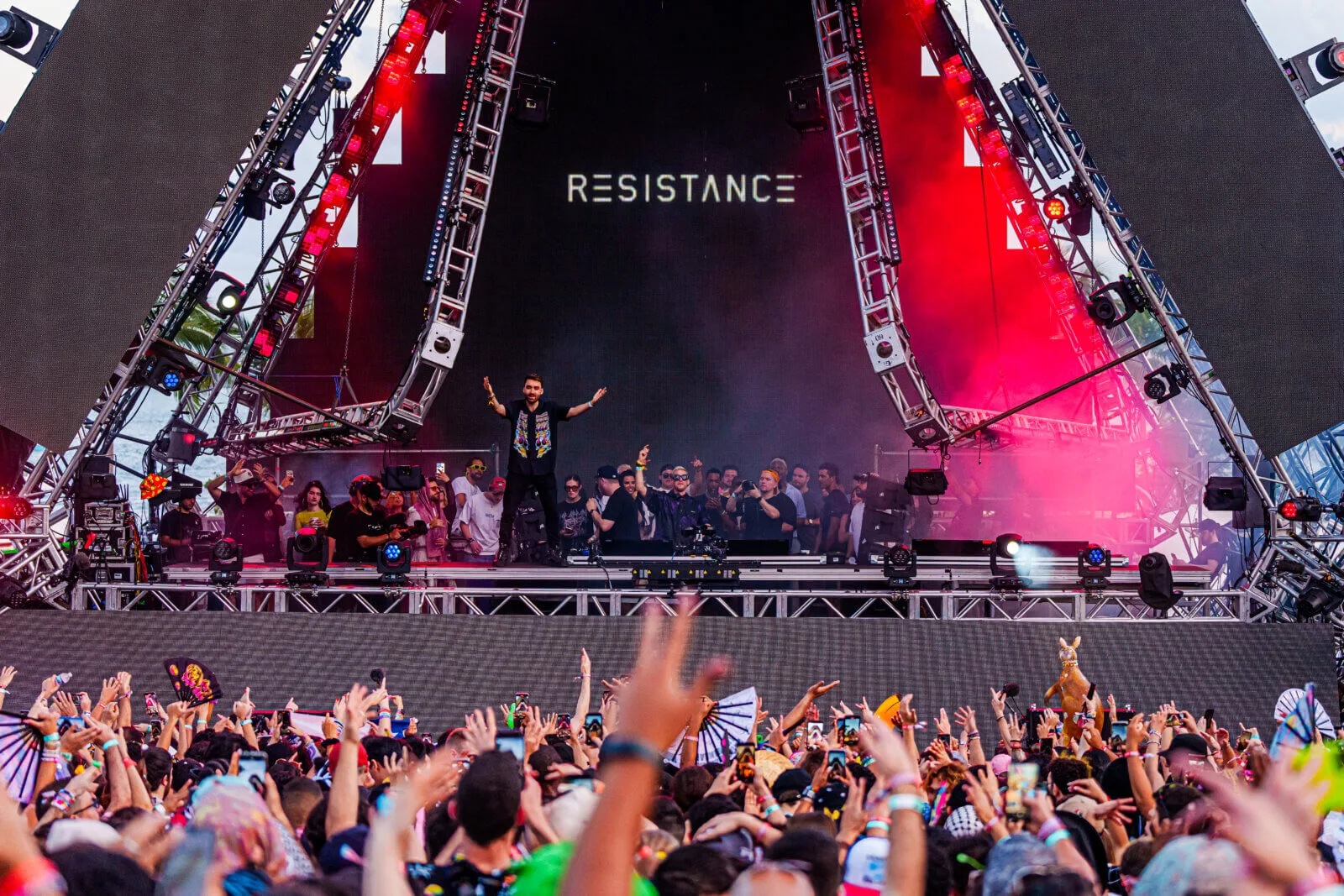
The main stage carries the broad, high-impact end of electronic festival music. RESISTANCE gives house and techno a distinct world through the MegaStructure and The Cove, where back-to-back sets and stage takeovers are treated as programming rather than a token underground corner.
That separation is useful. Ultra can put giant visual production and deeper club music on the same map without pretending they are the same experience. You can move from a set designed for the full skyline to a room built around patient mixing and still feel like you are at one festival.
Built for the broadcast
Ultra began its official live broadcast in 2012. The stream is now part of the festival's identity, not an extra camera pointed at the main stage. Sets keep moving long after the park empties, giving a worldwide audience a clear view of how different artists handle a festival-sized room.
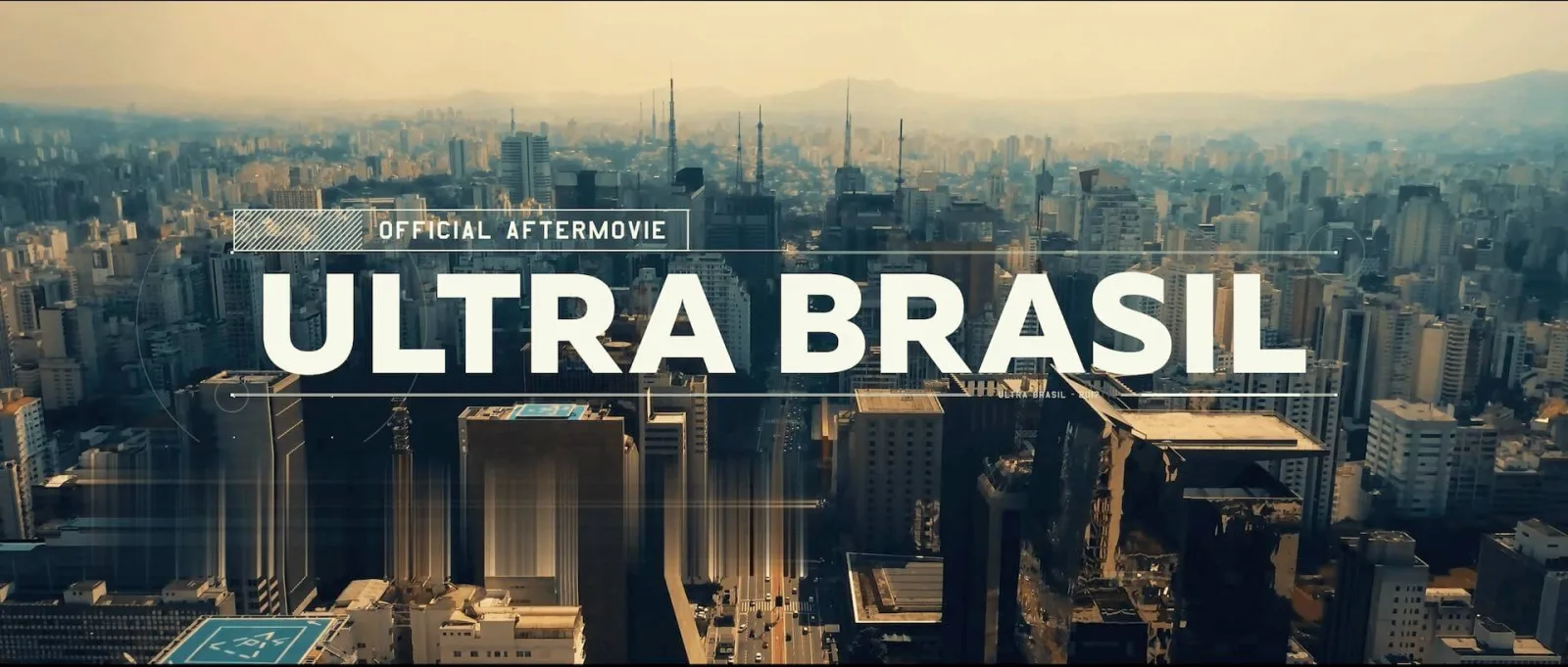
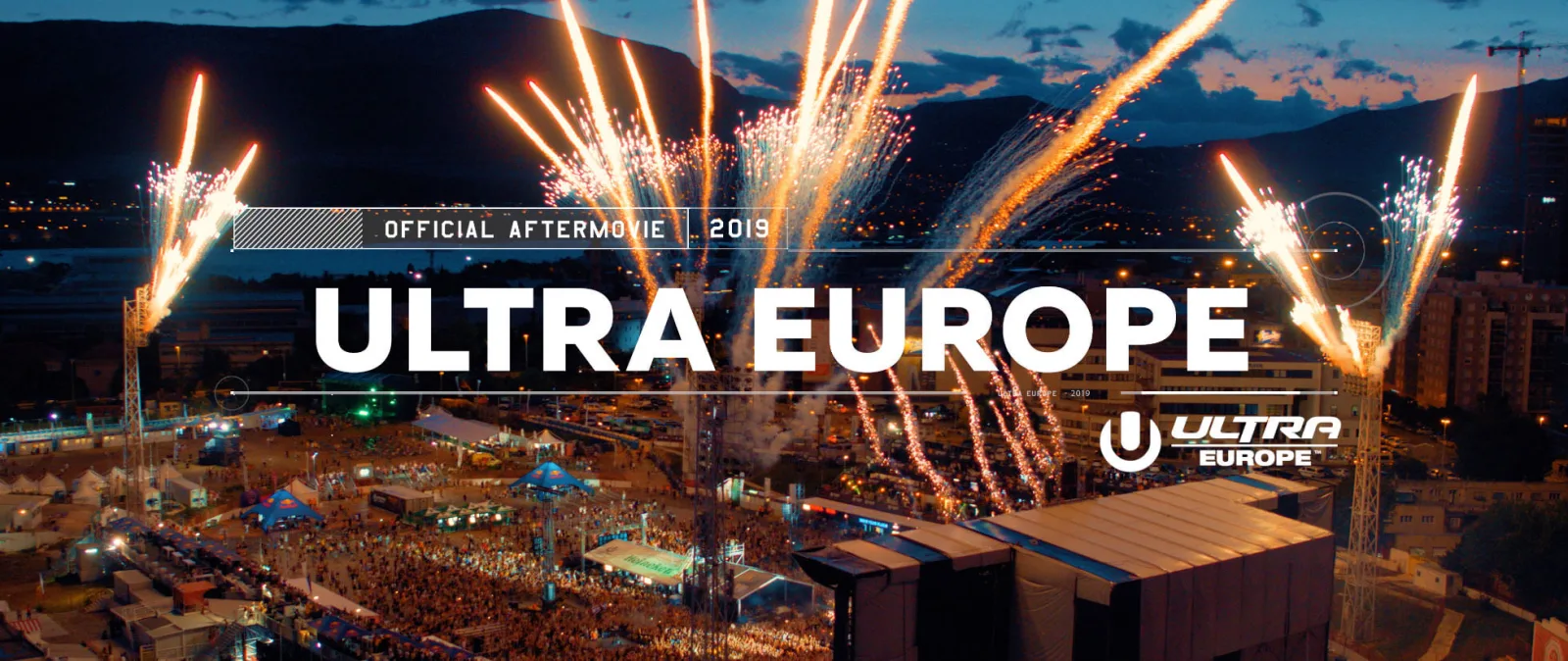
That reach helps explain why Miami remains the reference point. Ultra Worldwide has carried the name across six inhabited continents, but Bayfront established the visual language: waterfront, skyline, towering stages and a crowd arriving in the middle of the city. The footprint is global. The anchor is still Miami.