A free party that had to prove a point
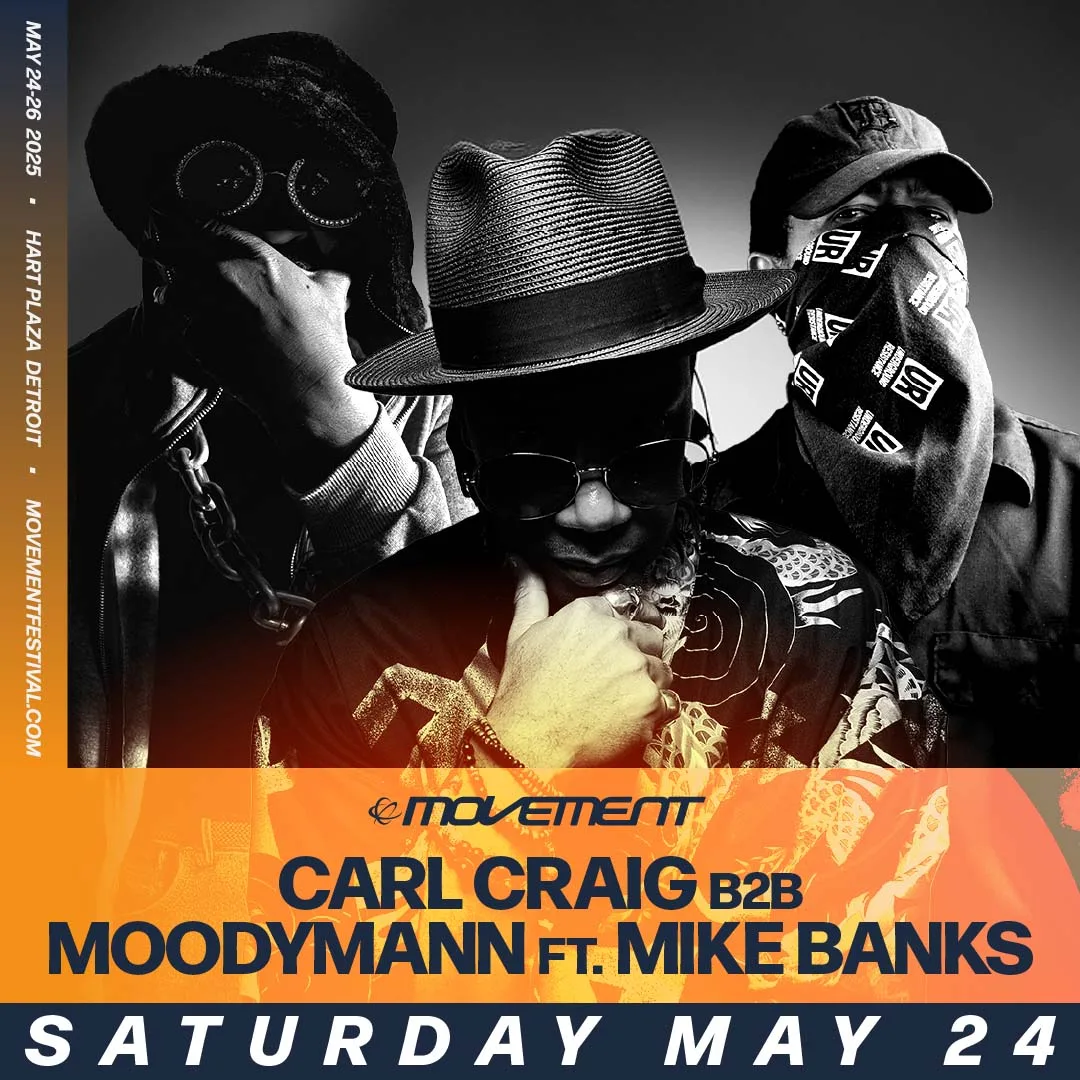
In 2000, Carl Craig and local producer Carol Marvin staged the first Detroit Electronic Music Festival at Hart Plaza. It was free, it ran three days, and it deliberately mixed genres: techno headliners Derrick May and Richie Hawtin closed the main stage the same weekend The Roots and Mos Def played it. Craig later said the excitement hip-hop fans showed for Slum Village on the bill helped pull wider attention to what was still, at its core, a techno festival.
Three names, three producers, one plaza
The festival changed hands more than once in its first decade. Derrick May took over as Movement in 2003. Kevin Saunderson followed in 2005, renaming it Fuse-In and charging admission for the first time in the event's history. Paxahau, the Detroit promotion company that had worked with all three, took over in 2006, restored the Movement name, and has produced it every year since, pausing only for the COVID-19 shutdown in 2020 and 2021.
Built on Belleville Three ground
Detroit is where techno was invented, by Juan Atkins, Derrick May, and Kevin Saunderson, friends who met at Belleville High School outside the city. Movement exists to keep that lineage visible: May and Saunderson have both run the festival, and all three have played it, which makes Movement less a tribute to Detroit techno than a continuation of it.
Six stages, one plaza
The festival spreads across six stages built into and around Hart Plaza, Isamu Noguchi's 1970s riverside design. The Movement Stage anchors the plaza's amphitheater for headline sets. The Detroit Stage is reserved for the city's own DJs. The Stargate Stage sits near the entrance for a block-party pace, the Pyramid Stage looks out over the Detroit River, and the Waterfront Stage mixes hip-hop and funk into the electronic lineup. Below the plaza, the Underground Stage takes over the amphitheater's below-ground level for the festival's after-hours, warehouse-leaning sets, a space that carries the same subterranean character the plaza's architecture was built with.
Open to everyone, priced for no one to be shut out
General admission at Movement is all-ages, and kids 12 and under get in free with a parent, a policy the festival has kept even as it grew into one of the largest electronic festivals in North America. Hart Plaza itself, designed by Isamu Noguchi and home to memorials including Gateway to Freedom and Transcending, sits at what the festival calls the historic heart of Detroit, on land that has hosted public gatherings since the 1970s.