
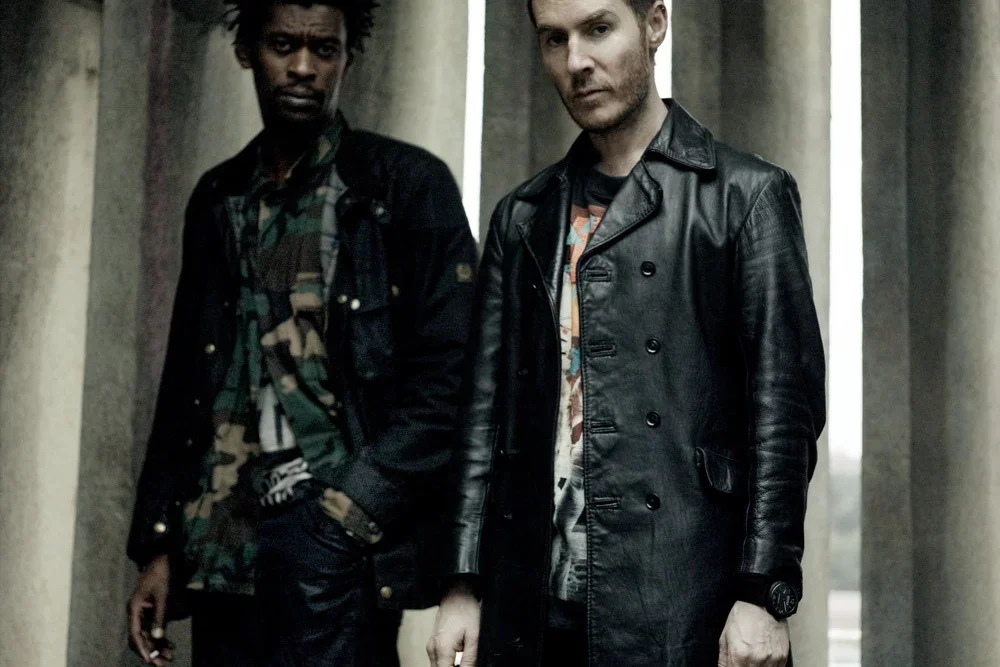
Massive Attack played The Star Theatre in Singapore on July 29. By August 3, AP reported that Singapore had barred Robert Del Naja and Grant Marshall from reentering the country after police investigated a Palestinian flag shown onstage and the band's support for Palestine.
The cited basis matters. AP and Pitchfork tie the decision to Singapore's restrictions on public display of foreign national emblems. Not venue policy, not promoter nerves: the city answered a stage moment with state power.
Massive Attack said audience members chanted "free Palestine" before the band came on and again at the end. The group also said all touring members were detained, questioned separately, and that some were subject to hotel-room searches and temporary passport confiscation. The AP-confirmed official action is narrower: Del Naja and Marshall are the named people barred from Singapore.
View this post on Instagram
The room is never separate from the city
For a politically loud act, the risk is no longer only whether a crowd agrees. It is whether the room's reaction, the screen behind the performers, and one held flag can change where the tour is allowed to go next.
With Massive Attack, the visuals are not wallpaper. Their shows have long carried protest language as part of the pressure system, next to the bass weight and the stage light. DJVibe was writing about Del Naja and Marshall back in 2002, when our archive covered Massive Attack coming out of the shadows. Singapore sits in that longer history, but the consequence is very current.
Tour routing now has to account for what can be shown, who can reenter, and which audience gesture becomes police paperwork. For artists who build stagecraft out of more than drops and lights, geography is part of the show.