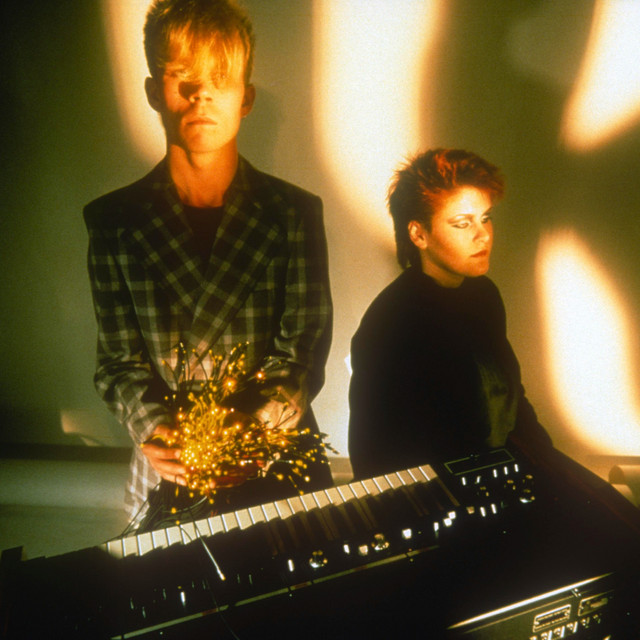
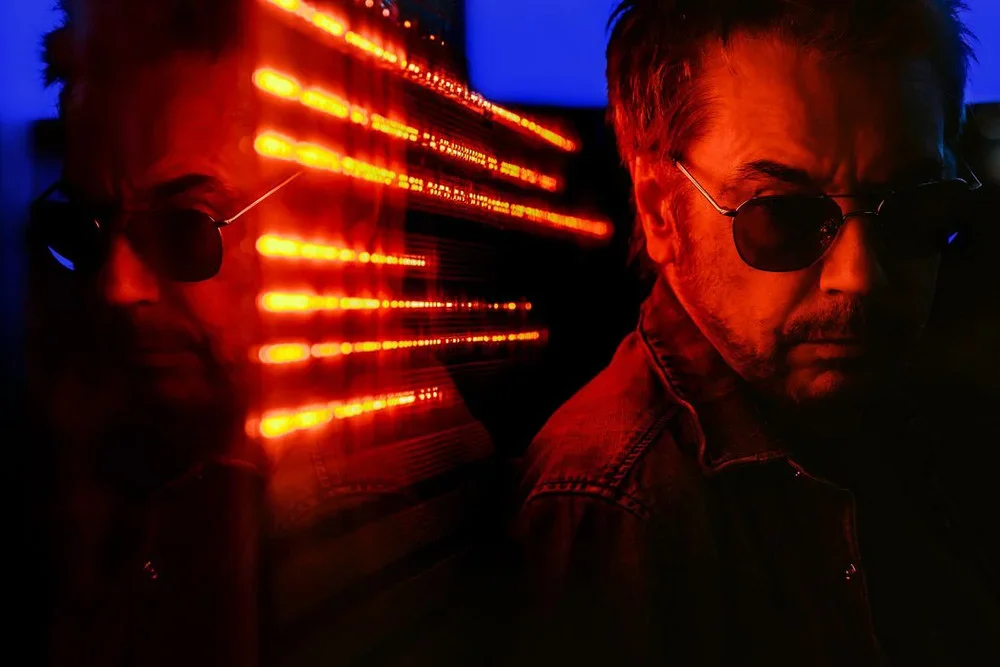
Jean-Michel Jarre's first book arrives November 24 through Thames & Hudson, and the structural decision is legible from the specifications alone. Machines: A History of Electronic Music runs 368 pages carrying 800 illustrations, built around 150 instruments pulled from Jarre's own archive. It is a $65 hardcover at 9.25 by 11.75 inches, which is coffee-table format for a practical reason. You cannot print 800 pictures of synthesizers at paperback size.
A memoir was available to him. Fifty years in, with Oxygène and Equinoxe behind him and shows at Pompeii and the Dead Sea on the record, nobody would have argued. He went with the hardware instead, which leaves him as one user among many.
The contributor list is where that choice shows its work. Thames & Hudson names Gary Numan, Vince Clarke, Gillian Gilbert, Nicolas Godin, Richie Hawtin, Armin van Buuren, Benjamin John Power, Nick Rhodes, Johnny Marr, Hans Zimmer and Pete Townshend. Read that as a genre list and it falls apart in about four seconds. Clarke came up through Depeche Mode, Yazoo and Erasure, Gilbert through New Order, Rhodes through Duran Duran, Godin through Air. Marr played guitar in The Smiths. Townshend is The Who. Zimmer scores films. Hawtin and van Buuren come out of two dance scenes that barely acknowledge each other. Read it instead as a list of people who put serious hours into a particular machine and it holds together fine.
Mixonline reports the history opens at Luigi Russolo's 1913 Futurist manifesto, which is a pointed place to begin. Russolo was making the case for noise as music decades before electronic instruments could deliver on it. Starting there sets the machines up as answers to a question somebody had already asked. From Russolo the same report has the book running through tape manipulation, analogue synthesis, digital tooling and 3D recording, out to AI-assisted performance. Ending on that puts the current argument about machine authorship at the far end of a century-long line rather than at the start of a new one.
Alongside the instrument photography, the publisher describes rare archival material, recreations of early sonic experiments, and sequenced stills from live performances.
We have been on this beat a while. DJVibe covered Planet Jarre in 2018, when he compiled fifty years of work into a single anthology, and Equinoxe Infinity on Astralwerks that November. Both were records about continuity, which is roughly what a 150-instrument survey is too, at a different scale.
There is a version of this book that is a victory lap. The specifications describe a different one: 368 pages of liner notes for equipment that never got any. Thames & Hudson has it at ISBN 9780500031506.