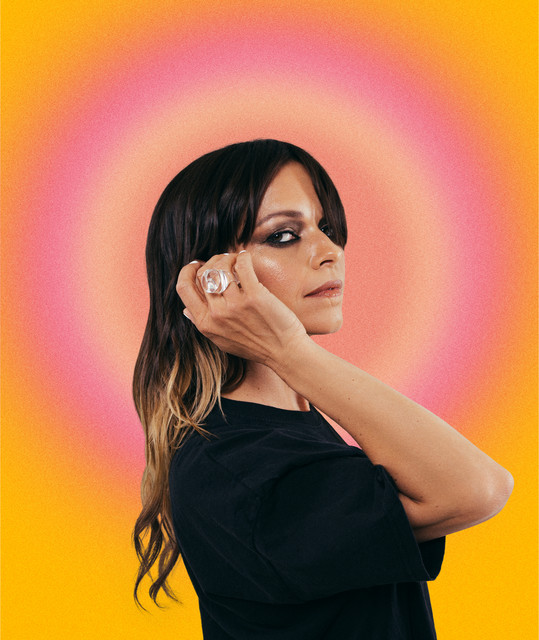
Björk did not need the eclipse as decoration. At Echolalia, the sky was part of the programming.
The one-day festival at Víðistaðatún in Hafnarfjörður sat inside Iceland's August 12 total solar eclipse frame, with Björk and Arca joined in the event frame by Kaitlyn Aurelia Smith, 33EMYBW, Sideproject and Ronja Jóhannsdóttir. Pitchfork had already framed the spring announcement around the path of totality, with Björk and Arca DJ sets at the centre.
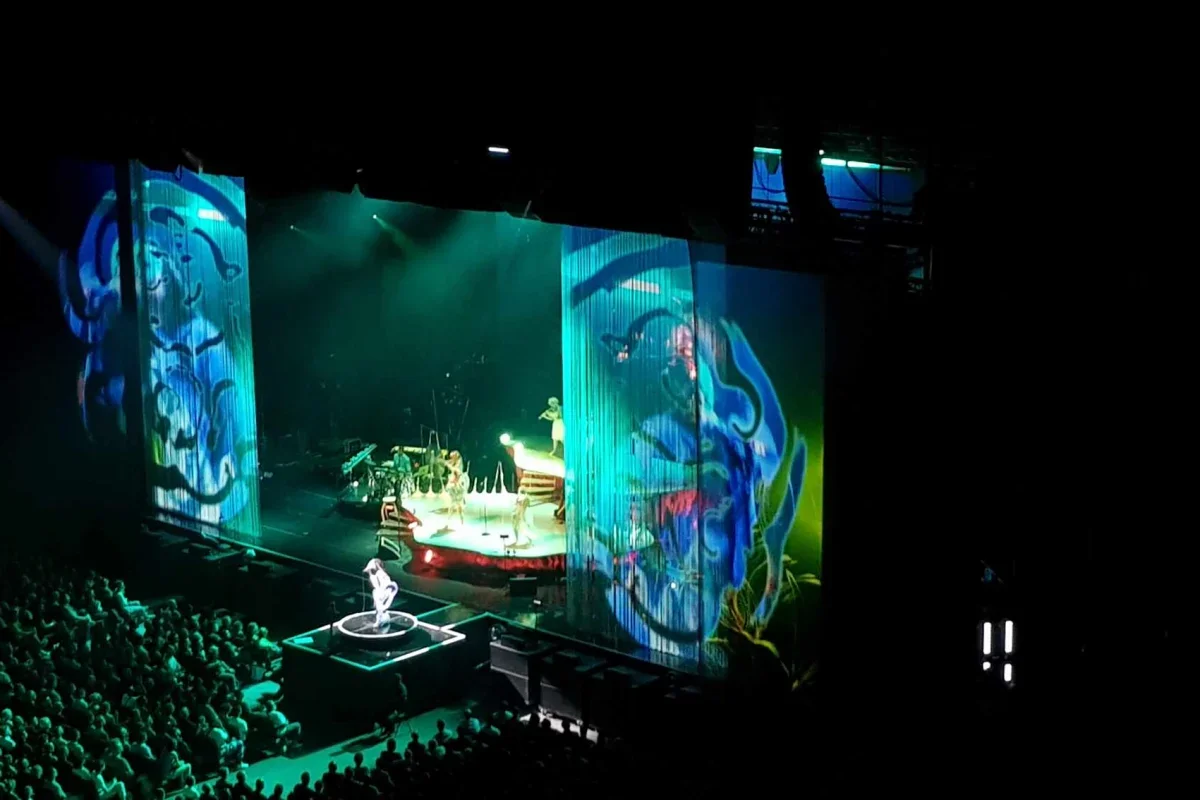
That matters because Echolalia was not only a field with a rare sky above it. The National Gallery of Iceland had Björk's echolalia exhibition running from May 31 to September 20, 2026, presenting Ancestress, Sorrowful Soil and a new work derived from her forthcoming album on a theatrical scale.
Put those pieces together and the festival starts to look less like a scenic rave and more like dramaturgy: eclipse outside, museum work inside, local collaborators in the bill, Smekkleysa history underneath it. The sky gave the timer. The artists gave the ritual a body.
The divide from the Ibiza eclipse lane is clean. Ibiza turns the same sky event into a service question: where people gather, how clubs plan, what a visitor needs to know. Echolalia turns it into an art-rave question: what happens when a DJ set is timed to a celestial blackout instead of bolted onto a weekend poster.
Short clips can show Björk at the decks, but they cannot prove the set's direction, crowd size or track selection. The safer read is also the stronger one: Echolalia used electronic programming to hold a place, a museum season and a rare few minutes of dark in the same frame.